
Horse sport leaders consider case for continual learning, Central Park test and need for humility
Influential members of the horse world discussed public perceptions of training methods and evolving attitudes toward horse sport.
Posted on 05/06/2026
Share


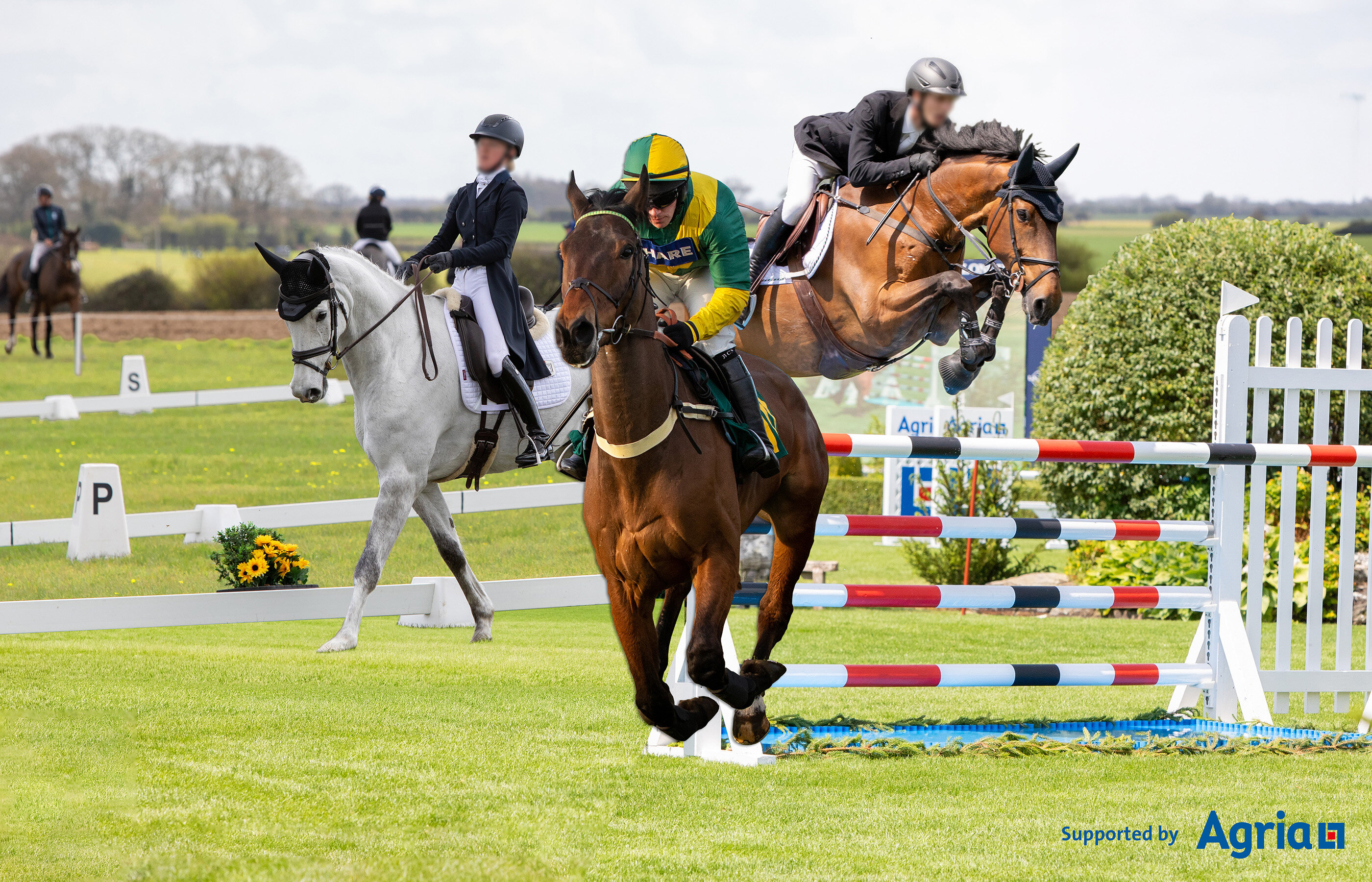
On 3 June more than 150 horse sport leaders across four continents gathered in London and online to discuss the results of our 5th annual YouGov poll* on public perceptions of the involvement of horses in sport at an event supported by Agria, which explored ‘What does good training look like?’
Sharing their thoughts on the results and their implications was a panel comprised of prominent horse sport leaders including Minette Batters, Chair of British racing’s Horse Welfare Board; David O’Connor, Director of Sports at the US Equestrian Federation and Chair of the FEI Eventing Committee; David Mountford, Chief Executive of the BEVA; and Lydia Hislop, journalist and broadcaster. The panel was chaired by journalist and editor Lucy Higginson.
The YouGov survey showed that the majority of the UK public – including those involved with horses – believe that horses are closer to pets than sport animals, believe that wellbeing should always be prioritised over performance in training and that around half either have concerns or do not trust at all that people involved in horse sport train their horses in a way that they believe is acceptable.
Presenting the results, Roly Owers, our Chief Executive, said:
“We have been clear that improving equine welfare is pivotal, not primarily because the public expects it, but because that’s exactly what it means to put the horse first. There is growing evidence of what we can do better today, and if we know better, we must do better.”
Sharing insights into the views of those polled on training, he revealed that, “If there is a conflict between wellbeing and performance in training, 70% of the public including 78% of horse people said that wellbeing should always take priority regardless of the effect on performance.”
Roly also highlighted the results indicating how the public think of horses, and compared these perceptions with those who interact with horses regularly:
“We asked the public how they think of horses – do they see them as leisure animals, or sport animals, as a pet or companion, livestock or even working animals? The results were a surprise. Sport animal scored lowest. A strong majority (65%) think of horses as pets or companions or as leisure animals, and more than half think of them as working animals or livestock.
“Those who interact regularly with horses were even more likely to consider horses as a pet, companion or leisure animal than those not involved with horses. They were also less likely to see them as livestock or farm animals. They were only marginally more inclined to think of them as sport animals.
“We need to be realistic about how views of what a horse is, can affect how they are treated and how that is perceived.”
As the panel discussion explored the results further and examined whether increased welfare and safety measures are needed in horse sport – which 57% of poll respondents believed to be the case – David Mountford shared his belief that in regulated sport, “the direction of travel is really genuinely positive – awareness is high, engagement is real”. He added, “What I think needs to improve, or continue to improve, is consistency and transparency.”
He observed that, “I think also one of the things that is true in horse sport, in racing, is that we don’t have much humility. We need to actually bring a big box of humility to the table. We can all learn every week, whether it’s from a colleague, whether it’s from someone with decades of experience and a huge tradition in the industry, or whether it’s from the latest research on how horses learn.
“People throughout the industry should be having lessons on riding, but also lessons on what’s going on with the science, how they can improve, how we can learn from others, both in research, new stuff, and tradition, old stuff.”
The importance of evidence and research in shaping how horses are cared for, trained and ridden was a recurring theme. Minette Batters said, “We’ve got to be focused on the best science that is available to us. Let’s continue to work with the best evidence we have, and continue to monitor our audience.”
When quizzed about the slight trend in reduced public support for the involvement of horses in sport, Lydia Hislop shared her view on how sport should respond, “we need to communicate better, but we also need to challenge ourselves to do better.
“If we look back over time, over many, many years, the things that we have improved, the things that we have come to understand better, the idea that we wouldn’t bring new technology, new understanding, data, to be able to make things better, is just an absurd position to hold. And so it’s a way of gently challenging ourselves, so that those who are inside the sport can look inside and challenge ourselves to do better. Then we’re also better armed, with that understanding, to communicate outside of the sport.”
Reflecting on the results that showed over half of respondents who interacted regularly with horses had concerns about training methods, David Mountford observed that, “If that’s the case, then most people who are involved with horses think everyone else is doing it wrong. And I think that’s a pretty good indicator of how we generally think of ourselves in the horse world, against the non-horsey world, but also between racing and showjumping, or between showjumping and dressage, or between happy hackers and National Hunt racing.
“We always think we do it well, the others are not doing it well. Those issues, I think, are where we can really come together by explaining within our industry, if we can agree within our industry what is good practice, what is good welfare, then there is also the potential to persuade those who have no contact with horses.”
Responding to a question from the online audience about what concrete, measurable changes the industry can commit to in the next few years to develop public trust, Minette shared that “welfare champions on every yard” are part of the Horse Welfare Board’s upcoming plans, along with looking at the horse’s whole life cycle. She observed that, “People are competitive […] welfare needs to be in that space, because welfare is about performance. The best welfare outcomes will drive the best performance outcomes.”
After an audience member observed that it’s not about what the horse world thinks, “It’s about what the public thinks – we should be looking at it from the eyes of a normal person,” David O’Connor reflected that openness and transparency are key to public trust. He said, “We have an expression in the United States that if you can’t train in the middle of Central Park and explain it and have people like it, then probably you’re doing it wrong. And I think that aspect of openness and eyes [and] being willing to be open, talking about yards, talking about training, talking about warm-ups, talking about competition, that is the way that is going to permeate all the way through the decision-making”.
Wrapping up the event, Roly highlighted that, “Welfare should be a wonderful positive – equine welfare as well as human welfare – and a wonderful opportunity and I think there is that collective responsibility of all of us to help with that.
“I think above all that equine welfare is a huge opportunity for us to sell the equestrian sector at large. We’ve got to make sure that we provide our horses throughout their lives, whatever their role, from companion to elite sport horse, with a good life.”
*All figures, unless otherwise stated, are from YouGov Plc. The online survey reflects the views of 4,310 respondents aged 18+ in the UK. Of those, 2.6% indicated that they regularly interact with horses.
Share
Topics
Related News
Webinar: Equine behaviour and wellbeing through management
Wednesday 15th February will see equine behaviourists Justine Harrison and Rosa Verwijs return to discuss how the way we manage our horses can have huge implications on their physical and psychological health.

Equestrian Sport discuss challenges and opportunities around public perception of welfare in sport
We offered support to equestrian disciplines as we challenged them to work together to "do more, faster” to demonstrably prioritise equine welfare.
Recommended Blog Posts
“The feeling of knowing that you’re making a difference is wonderful”
We meet superstar fundraiser Kelly Jay, who has raised more than £33,000 for our charity.
Let’s put the horse’s perspective at the centre when making rules for horse sport
We reflect on the FEI’s new ‘blood rule’ in showjumping.
“So how does Vet Day work then?”
Claire Dickie, Glenda Spooner Farm Centre Manager, gives an overview of how vet day works at our farms.
Enjoy reading stories like this?
Join over 65,000 other horse lovers and sign up for our email newsletter
Join over 65,000 other horse lovers and sign up for our email newsletter
Sign me up now
