
Should I carry or use a whip?
Find out more about whip use when riding or doing groundwork with horses.
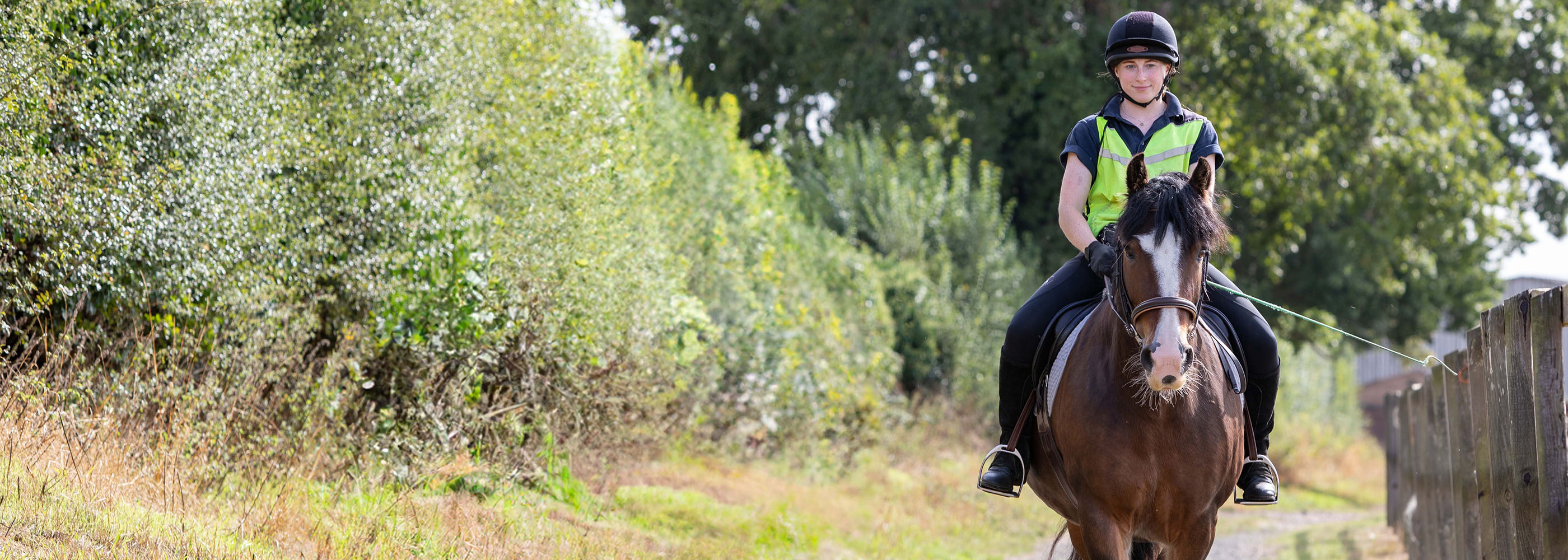
Find out more about whip use when riding or doing groundwork with horses.
Share this advice


Many of us carry a whip when we are riding out of habit, because we have been told that it is the right thing to do, or because everybody else does. But is this right? And if you decide that, for you – today – carrying a whip is the right thing to do, how should you use it?
To help us all to consider this, we have published a guide to start a conversation about how and why people use this most traditional of aids. Based on learning theory (i.e., how horses learn), this guide explores the effects on the horse of using the whip in different ways and shows how it can be used effectively and responsibly, without causing confusion, fear or pain.
The guide also supports our charity’s position that, when used correctly, the whip is not a bad tool – it is an optional piece of equipment that can be used in an ethically acceptable way when training and riding horses.

“There is definitely more room for good, shared practice within equestrianism and with that in mind I welcome this comprehensive guidance on whip use that World Horse Welfare has produced. It will be useful to anyone who rides or trains horses, at any level, and to those who teach others. We all need to ensure we are using the right tools in the right way to safeguard our horses’ welfare.”
Dickie Waygood MBE, Technical Director & Eventing Performance Manager at British Equestrian since 2016.
Should I carry or use a whip?

The guide “Should I carry or use a whip?’ includes:
- Guidance on carrying and using a whip
- Step-by-step illustrations on how to use a whip effectively to train your horse using learning theory
- Reconsideration of some traditional uses of the whip.
“This guidance on the use of the whip should help steer all who are involved in the training and riding of horses to consider whether their horse understands what is being asked of them and feels secure in responding. Having spent a lifetime coaching at all levels, I see a real benefit of this advice in helping riders and coaches understand whip use from the horse’s perspective, and making best use of this most traditional of aids.”
Yogi Breisner MBE, FBHS, World Class Performance Manager for the British Eventing Team from 1999–2016 and Olympic High Performance Manager for the Swedish Olympic Committee/Swedish Equestrian Federation since 2017.
If you would like to learn more about why World Horse Welfare decided to create this educational guide, you can read our blog Why has World Horse Welfare produced guidance on whether and how to use a whip?
Useful resources
-
- Jones P, Warren S. Horses hate surprise parties: Equitation science for young riders. 2016. Available from Equitation Science International and The Pony Club (UK).
- McLean AN. Modern Horse Training: Equitation Science Principles & Practice, Volumes 1 and 2. Available from Equitation Science International.
- McGreevy P, et al. Equitation Science, 2nd ed (2018). Wiley Blackwell. ISBN: 9781119241416
-
- British Equine Veterinary Association. Don’t Break your Vet. Series of short videos that explain the principles of learning theory in the context of basic handling and veterinary procedures.
- Dyson S. The Ridden Horse Pain Ethogram. Scientific review paper – follow link for ‘Equine Veterinary Education review article’.
- Equitation Science International. Andrew McLean on Negative Reinforcement. 3-minute video.
- Equitation Science International. The use of the whip in horse training as discussed by Andrew McLean. 2-minute video.
- Equitation Science International. Multiple articles on learning theory and equitation science.
- Gleerup KB, Wilkins C. The Equine Pain Face. How to tell if your horse is in pain.
- International Society for Equitation Science. Principles of learning theory in equitation.
- McLean A. Biomechanics and learning. 50-minute video (scroll to bottom of page).
- McLean A. The positive aspects of correct negative reinforcement. Academic paper; only abstract available for free.
- McLean A. 6 Ethical Ways to De-spook Your Horse.
- Pearson G & Bryant H. How to tackle unwanted behaviours. Presentation featuring a series of case studies.
- Pony Club Australia Facebook page.
- Ricard M, Kerley B. Ridden Horse Pain Ethogram: 24 Signs of Pain in Horses Under Saddle.
- TheHorse.com. 10 Learning Theory-Based Horse Training Principles.
- World Horse Welfare. Is it acceptable to use a whip on a horse?
- World Horse Welfare. Understanding our horses’ behaviour and how they learn. Webinar with Dr Gemma Pearson and Claire Dickie.
- World Horse Welfare. How to restrain horses appropriately. Webinar with Dr Gemma Pearson, Brad Hill, and Tony Evans.
- World Horse Welfare. Training horses: Where to begin. Webinar with Dr Gemma Pearson and Eileen Gillen.
- World Horse Welfare. Training: how do horses learn?
- Wyllie S. Dealing with jump refusals.
How horses learn – a short course for riders, coaches, and trainers of all levels and disciplines provided by Equitation Science International. Covers the fundamentals of successful horse training including a thorough introduction to how horses learn, as well as equine ethology and biomechanics.
Last updated: 22/6/2026. Advice collated by the World Horse Welfare research and education team and externally reviewed by Dr Gemma Pearson BVMS Cert AVP (EM) MScR CCAB PhD MRCVS
Share this advice
Popular advice in General advice

Buying or selling a horse: top tips
If you are thinking about buying or selling a horse here are some tips to help make sure everything goes well.

Fireworks: keeping your horse safe
Fireworks events can be a worrying time for horse owners. Read our ideas to help you and your horse have a less stressful night.
Other advice categories

All webinar categories:
Call our Advice Line
+44 (0)1953 497 238Not found the advice you were looking for? Our friendly team of horse care experts offer free practical advice. What can we help you with today? Our advice line is available 8.30am-5:00pm, or you can email education@worldhorsewelfare.org.

