
Driving change: ending long-distance transport of horses across Europe for slaughter
Progress is being made, but thousands of horses still face long journeys to slaughter across Europe.
Posted on 07/08/2026
Share


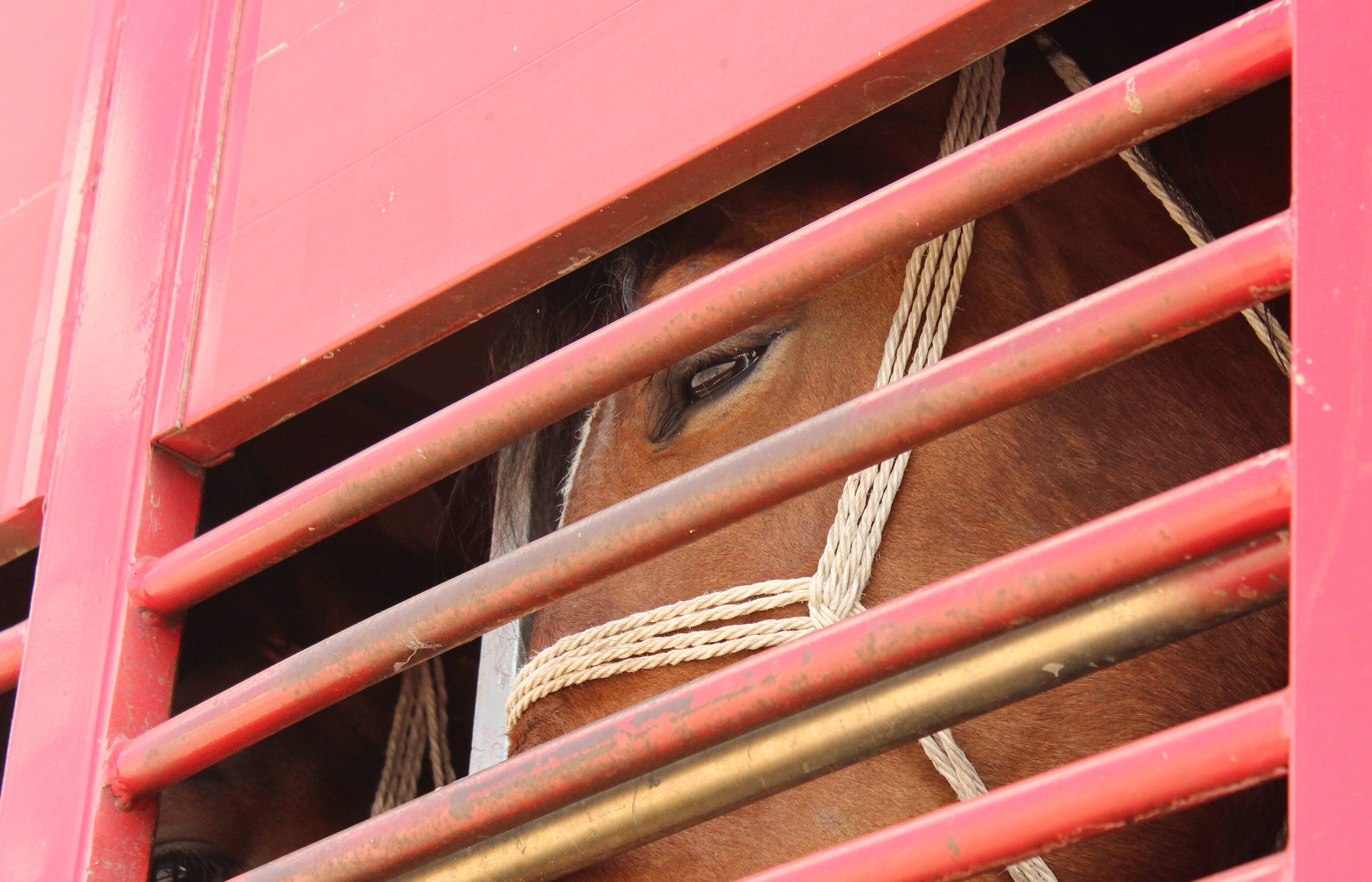
For almost a century, World Horse Welfare has campaigned to end the long-distance transport of horses to slaughter. Over the years, we have seen real progress, with fewer horses making these gruelling journeys across Europe. But thousands still suffer every year.
We catch up with our Research and Education Officer, Alana Chapman, to find out how far we have come, the challenges that remain and why we are continuing to push for change.
Our determination to end the long-distance transport of horses across Europe to slaughter remains as strong as ever. While progress has been made thanks to everyone who has joined us in our mission, our work is far from over.
Long-distance transport poses serious risks to horses. Extended journeys can leave them vulnerable to disease, injury and exhaustion. These challenges are particularly concerning given their destination, making it even more urgent that we continue to push for change.
Understanding the scale of Europe’s meat trade
We’ve been campaigning to stop horses suffering long journeys to slaughter since the charity’s inception in 1927. While we’ve successfully campaigned for a ban on live exports to slaughter from Great Britain to Europe – reducing journey times for most British horses – across Europe, thousands of horses can still legally be transported on long and gruelling journeys to slaughter.
Since day one of our long distance to slaughter campaign in Europe, one of our biggest challenges has been identifying how many horses are moved across Europe as part of this trade. Something that hasn’t always been easy to determine.
For many years, our researchers and investigators have monitored horse movements on known slaughter routes across Europe. Twenty years ago, our understanding of the scale of this trade relied largely on first hand observations of shipments. But to truly measure whether our campaign was making a difference, we needed official data to back up what we were seeing on the ground.

The most reliable data source on the numbers of horses transported for slaughter in Europe is the Trade Control Expert System (TRACES). This is a database which is used by both the European Commission and member state governments. Because the database is not publicly accessible, gaining access to the TRACES data was a major hurdle. Following repeated requests to the European Commission, we finally were given access to the horse data in 2010.
While TRACES data is not perfect, it provides valuable insight into trends in the numbers of horses transported for slaughter across Europe. Combined with insights from our own investigations, we now have a clearer picture of the scale of this trade.
In 2011, an estimated 80,000 horses were being moved across Europe every year for slaughter. As we have continued our campaigning efforts, this number has fallen steadily over subsequent years.
Moving in the right direction
Fast forward to the present day and significant progress has been made. Over the past five years, much of our focus has been on strengthening our existing evidence base to support meaningful change. We have commissioned key research projects examining horse welfare upon arrival at slaughterhouses, as well as evaluating how effectively horse movements can be monitored through current European movement systems like TRACES. This work has been vital in identifying gaps and opportunities for improvement.
So far, we’ve had some major wins:
Fewer horses are moving across Europe for slaughter
TRACES data continues to show a clear and ongoing decline in the number of horses moving across Europe for slaughter.
In 2016, we estimated that 25,000 horses were being transported across Europe over long distances to slaughterhouses. Today, that figure has dropped even further to around 12,000 horses.
These numbers are supported by encouraging evidence from our investigations on the ground. When we visited European control posts, including one in Hungary back in 2011, it was almost guaranteed that we would witness a shipment of horses moving through. These control posts are approved facilities where certain horses, such as those for slaughter, which are transported up to 24 hours must be unloaded to rest, feed and drink before they continue their journey. Today, by comparison, our intelligence indicates that shipments are more likely to pass through weekly rather than daily.

While we can be confident from the data that there is a downward trend in horses moving long distance to slaughter, the exact numbers are unknown. Although we have always known that it was highly likely that some horses were moved under false declarations across Europe to slaughter. Following our research into TRACES, we now have solid evidence that this is indeed happening – meaning the true number could be higher.
Welfare conditions are improving
Historically, the welfare issues associated with the meat trade were severe. During our investigations in 2008 and 2011, injuries were widespread, with many horses suffering from chronic conditions and disease. Since then, welfare standards have improved somewhat from a legal perspective. For example, horses are now required to be transported in individual partitions.

Through our work with slaughterhouses and transporters, we’ve also seen growing awareness of the welfare issues associated with the trade, along with concerted efforts to make welfare conditions more of a priority across the sector. While this has led to significant improvements, and we’re no longer seeing the horrific injuries that used to be commonplace, horses are still being subjected to gruelling journeys that are physically and mentally exhausting.
Alongside our research work, our field investigations continue to uncover the realities faced by transported horses. Recently, the number of horses being transported long distance to slaughter in Europe seems to have plateaued, but thousands are still enduring extremely difficult journeys that compromise their welfare.
Ending long-distance horse transport to slaughter in Europe
Combined with our advocacy efforts in Brussels and Strasbourg, we are ensuring that this issue remains firmly on the agenda at a policy level.
By approaching this challenge from every angle – research, investigation and advocacy – we are driving real progress. But our work isn’t finished. Until long-distance transport to slaughter is a thing of the past, we will continue working tirelessly to protect horses and improve their welfare.
Looking back at the progress we’ve made, it’s clear that together we are helping to drive change. Fewer horses are being transported long distances to slaughter than ever before, but thousands still endure journeys that compromise their welfare.
That’s why we’ll continue working with colleagues, decision-makers and industry stakeholders across Europe to keep this issue firmly on the agenda until long-distance transport to slaughter is a thing of the past.
Share
Topics
Related Blog Posts
We find out the latest news on Equine Grass Sickness
Belwade Farm Rescue and Rehoming Centre Manager Eileen Gillen shares insights from a conference on the complex disease.
The Trafficked 20 – what do we know so far?
Our Head of Public Affairs brings us up to date with what we currently know about the horses rescued from illegal smuggling.
Recommended News Articles
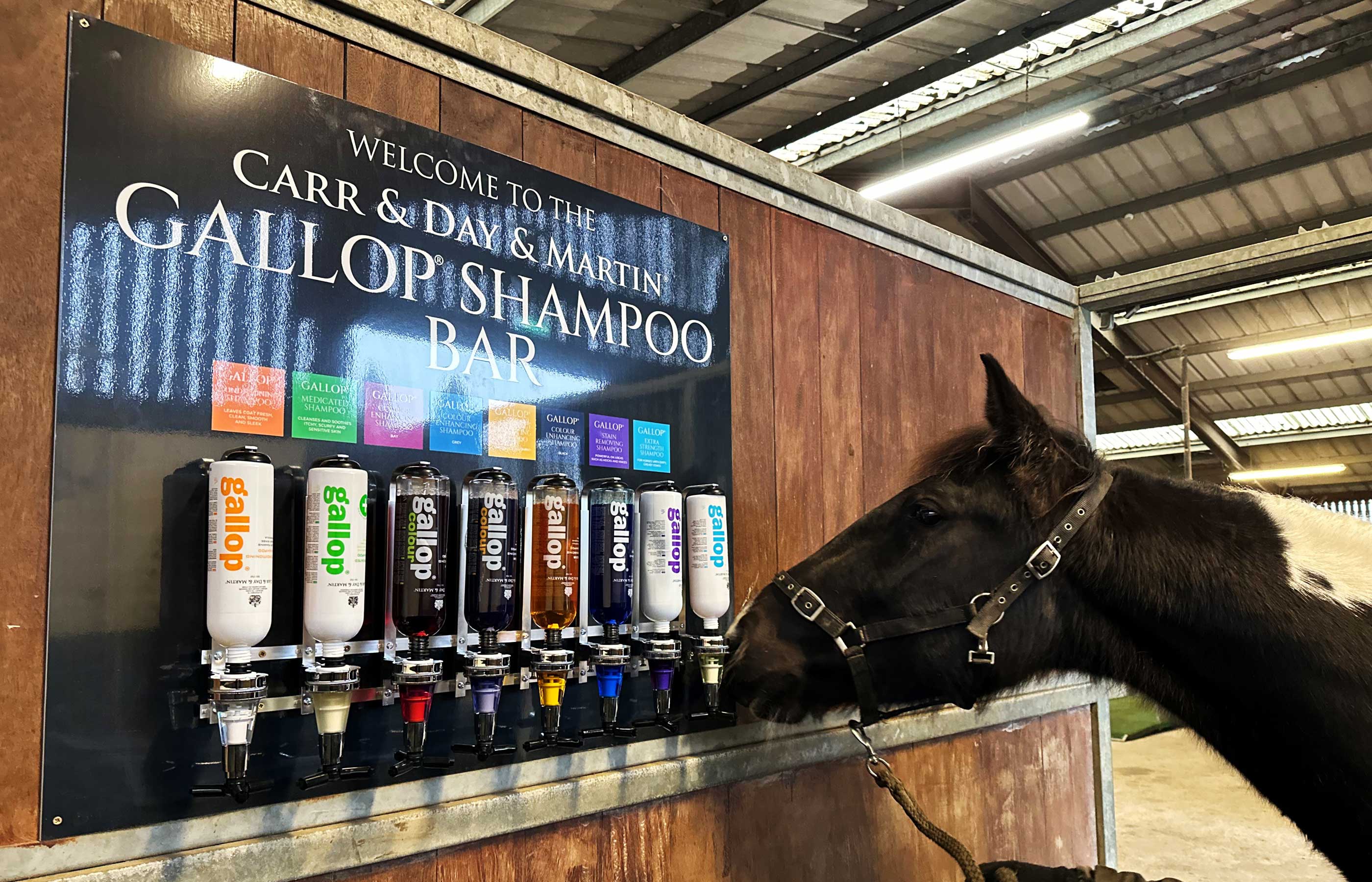
Carr & Day & Martin now sponsors all four of our stableyards
The company now supports all four of our farms as Official Care Supporter and donates £1 from every sale of specially selected products.
Effect of Cost-of-Living Crisis on horse keepers.
Results of survey into impact of Cost-of-Living Crisis revealed

Collaborative working saved young pony attacked by stallion
Charities work together to secure the best outcome for pony in urgent need of assistance.
Enjoy reading stories like this?
Join over 65,000 other horse lovers and sign up for our email newsletter

Join over 65,000 other horse lovers and sign up for our email newsletter
Sign me up now
